UNRESTRICTED MASTER PLUMBERS
What Causes a Burst Pipe in Winter?
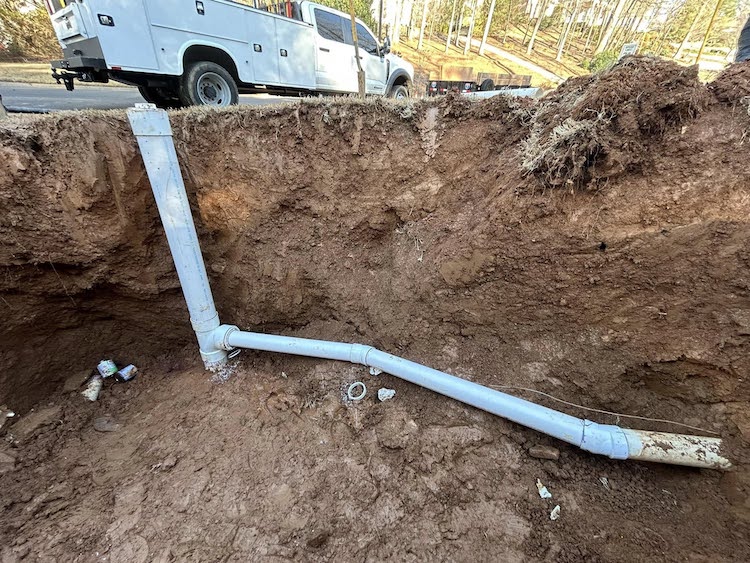
When temperatures drop in North Atlanta, plumbing problems can show up fast—and a burst pipe is one of the most damaging (and expensive) surprises a homeowner can face. The tricky part is that pipes don’t usually burst “because it’s cold” in a simple way. They burst because of what happens inside the pipe when water freezes, expands, and pressure builds.
If you’re in areas like Roswell, Marietta, Smyrna, Kennesaw, Johns Creek, or Cumming, understanding the real causes of winter pipe bursts can help you prevent them—and know when it’s time to call for emergency plumbing services. Below is a clear breakdown of what causes pipes to burst in winter, the most common risk factors, and what to do if you suspect freezing or a leak.
The #1 cause: frozen water expands and creates pressure
Water expands when it freezes. Inside a pipe, that expansion creates a blockage of ice. The real danger isn’t just the ice itself—it’s the pressure that builds between the ice blockage and a closed faucet or valve. Here’s what typically happens:
- A section of pipe gets cold enough for water to freeze
- Ice forms and restricts flow
- Pressure rises behind the ice plug
- The pipe fails at its weakest point (a joint, a corroded area, or a thin section)
Important note: the pipe often bursts not directly where the ice forms, but where pressure finds the weakest spot.
Pipes most likely to burst in winter
Some pipes are simply more exposed than others. In our region, the most commonly affected lines include:
- Exterior walls (especially north-facing walls that get less sun)
- Uninsulated crawlspaces and basements
- Attics (especially above garages)
- Garage supply lines
- Outdoor hose bibs/spigots and the lines feeding them
- Irrigation-related plumbing that wasn’t winterized properly
Even in Georgia, a few nights below freezing can be enough to cause problems if the plumbing is vulnerable.
Common winter burst pipe causes (beyond “it got cold”)
1) Poor insulation (or none at all)
Insulation is one of the simplest preventions, but it’s often missing in:
- Older homes
- Renovations where plumbing was rerouted
- Additions over garages
- Crawlspaces with airflow
Pipe insulation sleeves are cheap compared to water damage restoration.
2) Cold air drafts and air leaks
A pipe can freeze even when the house is heated if cold air is blowing directly on it. Drafts often come from:
- Unsealed crawlspace vents
- Gaps around plumbing penetrations
- Poorly sealed attic access points
- Garage doors that don’t seal well
If a pipe sits in the path of cold airflow, it can freeze quickly.
3) Thermostat setbacks (turning heat down too much)
Lowering the thermostat at night can save money—but in a cold snap, it can also increase risk, especially if plumbing is in exterior walls or unconditioned spaces. If you’re leaving town in winter, don’t shut the heat off. Set it to a safe baseline temperature.
4) Closed interior doors blocking warm air
This one surprises people. Closing doors to rarely used rooms can reduce warm airflow to plumbing in those walls. If a bathroom is on an exterior wall and the door stays shut, the temperature in that space can drop enough to freeze a line.
5) Power outages
A winter storm doesn’t need to be extreme to knock out power. If your heat goes off, pipes can freeze rapidly—especially in crawlspaces, attics, and garages. If you lose power during freezing temps, treat it as a plumbing risk event.
6) Existing pipe weaknesses (corrosion, aging, bad joints)
Cold weather doesn’t “create” corrosion, but it can expose weak points. Pipes that are already compromised are more likely to fail when pressure spikes. Weak points include:
- Corroded galvanized lines
- Old copper with thin spots
- Aging PEX connections
- Poor solder joints
- Previous repair sections
7) Outdoor spigots left connected to hoses
If a hose is attached, water can remain trapped in the line and freeze. That’s why disconnecting hoses and winterizing hose bibs matters—even in milder climates.
Warning signs that a pipe may be frozen (before it bursts)
If you catch freezing early, you can sometimes prevent a burst. Watch for:
- Little to no water flow from a faucet
- Frost on exposed pipes
- Unusual smells from drains (if a line is blocked)
- Bulging in pipe insulation
- Strange noises when turning on taps (whistling, banging)
- Water pressure that suddenly drops
If you suspect a frozen line, it’s smart to act quickly—because once pressure builds, failure can happen suddenly.
What to do if you think a pipe is frozen
If you’re comfortable doing basic steps safely:
- Turn on the faucet (a small trickle can relieve pressure)
- Warm the area gently (space heater at a safe distance, warm air from a hair dryer)
- Open cabinet doors under sinks on exterior walls
- Shut off water if you see any leaking or suspect a crack
Avoid open flames or torches. Those can damage pipes and create a fire hazard.
If you can’t locate the frozen section, or if the line is in a wall/ceiling, it’s time to call the professionals at Specialty Plumbing and Drain LLC.
What to do if a pipe bursts
A burst pipe is an emergency because water damage spreads fast. Prioritize these steps:
- Shut off the main water supply immediately
- Turn off electricity in affected areas if water is near outlets or panels
- Open faucets to relieve pressure and drain remaining water
- Call the emergency plumbers at Specialty Plumbing and Drain LLC right away
- Document damage for insurance (photos/video)
Specialty Plumbing and Drain LLC provides emergency plumbing services across North Atlanta, with a reputation for being timely, professional, and transparent—which matters a lot when you’re dealing with active water damage.
How a pro finds the real problem (and prevents repeat issues)
Fixing the burst is step one. Step two is preventing it from happening again. You may recommend:
- Replacing the damaged section properly
- Improving insulation and sealing drafts
- Rerouting vulnerable lines (when feasible)
- Checking water pressure and related components
Using video plumbing inspections when drain/sewer issues are also suspected (especially if a freeze event caused backups)
And if the issue involves underground lines or repeated failures, Specialty Plumbing and Drain can also evaluate trenchless plumbing repair and trenchless water line repair options, which can reduce disruption compared to traditional digging in the right situations.
Why homeowners choose Specialty Plumbing and Drain LLC
When winter plumbing problems hit, you want someone who can diagnose quickly and explain clearly. Specialty Plumbing and Drain LLC is led by an Unrestricted Master Plumber, known for being informative and transparent, and backed by a 5-star Google rating. They also offer advanced solutions like video camera inspections and trenchless services, so you’re not stuck with guesswork or unnecessary demolition.
Need emergency help with a frozen or burst pipe?
If you’re dealing with a frozen line, active leak, or burst pipe, don’t wait. The faster you shut off water and get a professional on-site, the more damage you can prevent.
Call Specialty Plumbing and Drain LLC to schedule service and get fast, reliable help from a team that treats your home with care.
Contact Us
Commercial Plumbing Services
– Clogged Toilet Cleaning
– Commercial Plumbing
– Drain Cleaning
– Emergency Plumbing Repairs
– Expansion Tanks
– Gas Line Installation
– House Spigots
– Hydro Jetting
– Industrial Plumbing
– Main Water Line Repairs
– Plumbing Video Camera Inspection
– Pressure Reducing Valves
– Residential Plumbing
– Sewage Ejector Pump
– Sewer & Drain Services
– Sewer Line Cleaning
– Slab Leak Repair
– Sump Pump Repairs & Installs
– Trenchless Plumbing Repair
– Trenchless Water Line Repair
– Tunneling for Plumbing
– Water & Sewer Line Repairs
– Water Heater Replacement & Installs
– Water Leak Detection
5 Star Reviews

Sean was amazing! I had an emergency situation and they rushed out on a Saturday. Sean quickly found the issue. [...]

Sean did a great job fixing our supply line. He and his team were very professional and had my leaking pipe fixed on the same day I called. As a business owner myself, it’s nice to see customer service provided the right way.
Thanks Sean!
– Aaron T.
Sean was amazing! I had an emergency situation and they rushed out on a Saturday. Sean quickly found the issue. He provided excellent advice as a master plumber. He directed me to my HoA since they may be responsible. He ended up being correct. He was extremely helpful in an incredibly stressful situation.
– Chad D.
I had them come out for a second opinion, and, I’m glad I did, as the first company I got out were trying to rip me off and sell me an unnecessary hydro jetting service at a ridiculous price. Sean was very transparent about everything and seemed like he genuinely cared. I’ll definitely be calling them again in the future for any plumbing issues I have!
– Zac
I had them come out for a second opinion, and, I’m glad I did, as the first company I got out were trying to rip me off and sell me an unnecessary hydro jetting service at a ridiculous price. Sean was very transparent about everything and seemed like he genuinely cared. I’ll definitely be calling them again in the future for any plumbing issues I have!
– Zac
Wow, great customer service still exits, like the good old days. From the first phone call, Jamie took the time to explain some drain line basics; which services help, which services actually can make the problem worse, and we had two problems to cover. She set us on the right path, then Sean came out to inspect both problems: faulty gutter drains, and a leaky water heater. He went above and beyond in assessing and explaining solutions. He was very informative, patient, and above all, very kind. My wife was sold! He adroitly took us through a tricky water heater and gas line repair…and now it looks and works great. Thanks!! We highly recommend them across all their services, they can actually handle a lot.
– Gus S.
Great Company. I had Sean replace In 2 different houses the old cast iron pipes in the garage. He is a stellar guy, very professional and does an excellent job at a reasonable price. Highly recommended! Very happy, thank you, Sean.
– Patty F.
Sean did a great job replacing my main water line to the house. When he had to remove a large shrub to repair the water line underneath it, he even replanted it on the other side of the driveway. Excellent service and would highly recommend.
– Doug R.
Sean did a great job fixing our supply line. He and his team were very professional and had my leaking pipe fixed on the same day I called. As a business owner myself, it’s nice to see customer service provided the right way. Thanks Sean!
– Aaron T.
He did a great job. Were very happy with water heater replacement. It was very affordable and professionally well done. Couldnt recommend sean more. Sean got our house within code again, thank god!
– Barrett L.
Absolute 10/10 service! The owner Sean himself came out. He was extremely knowledgeable, did a fantastic job explaining to me what was being done and was extremely professional and respectful. They used premium materials with a 25 year lifespan. Other companies will use cheaper materials and then you have to call them back out next year. Specialty Plumbing does it right the first time! Fixed my issue within 2 hours and left virtually no visible marks in the lawn. 10/10 would do business with in the future.
– Zachary H.
Absolute 10/10 service! The owner Sean himself came out. He was extremely knowledgeable, did a fantastic job explaining to me what was being done and was extremely professional and respectful. They used premium materials with a 25 year lifespan. Other companies will use cheaper materials and then you have to call them back out next year. Specialty Plumbing does it right the first time! Fixed my issue within 2 hours and left virtually no visible marks in the lawn. 10/10 would do business with in the future.
– Jan C.
Talking about CUSTOMER SATISFACTION. Sean is your guy. Here’s my experience. During my vacation trip in PR this holiday season, got informed by my neighbor of a burst pipe at home caused by the freeze (perhaps 4 days of running water we estimated). I didn’t know who to call, but my neighbor recommended me Sean as the go to company because of previous experiences. Glad he did. In my case, the water line runs across a bridge (weakest point) and precisely the location of the burst. After inspection they found additional bursts, but lucky for me none inside the house. Overall job they had to replace an old galvanized steel pipe with a more suitable cross-linked polyethylene (PEX) material, and trenching from the water meter up to the bridge. Not an easy job, but they had all the machinery to make it happen. They fixed the situation the same day. When I came back home from vacation I was very pleased with the results. You cannot even tell there was worked done in my place. Most importantly, the outer pipe across the bridge was completely insulated and inside a SCH 40 steel pipe sleeve. Definitely, a much better installation of what I had before with no chances of a frozen pipe to ever happen again. And this is just the install. Then he helped me manage the insurance claim by providing the necessary documentation to support it (no questions asked by the insurance adjuster). What impresses me about Sean is taking pride of his work. Very knowledgeable, friendly and quality driven, with ultimate focus in customer satisfaction. I fully recommend him. Simply the BEST!!!
– Rafael D.
Reliable, quick to respond, reasonably priced, good quality work. Small business that treats their customers right. I would 100% recommend.
– Drew L.
Our toilet backed up on a Saturday night. We called on Sunday morning and Sean was there by ten. We had a blockage in the main line as well as a large root ball in the line in the flower bed. He has all of the latest equipment, and is certified in underground plumbing. He explained our options and got to work. He found the first blockage, dug down 5 feet, replaced pipe, then wanted to make sure the line was clear to the street, which was when he discovered the second blockage. Another dig and pipe replacement. He worked until after nine that day. He refilled holes, cleaned up, spread straw and made sure things were neat. His price was amazing for the time and amount of work that he did. We cannot say enough good things about him. He is personable, fair and thorough. Should this happen to you, give him a call first. He also gave us the name of someone to mitigate the inside mess with the insurance company. So nice to find a company that takes pride in their work and does the right thing.
– David D.
They came out the day I called and did the work that night. And they beat the price of the other plumbers who were going to take a week to get to it. My water bills have gone back down. Very happy with this company!!
– Ro M.
We discovered a leak in our kitchen that had gone into our basement. We found Specialty Drain/Sean through recommendations in our community’s FB page. He came out & brought someone who does water remediation work since we had a leak. He was very prompt, very professional & thorough. They quickly determined the problem & were super thorough with explaining options for fixing the problem. I would highly recommend Sean.
– Lisa M.
Sean and Jami are awesome. Sean came out and did a quote to assist me with getting the best outcome from my insurance company (ended up being an insurance claim). He repaired a pipe connected to a flange, and then came back to install a new toilet, after my flooring was done. Sean is very knowledgeable and has a commitment to precision, and kept me informed along the way. He is a Master Plumber. Would highly recommend using Specialty Plumbing if you want the job done right.
– Brent D.
Excellent service! Sean and his crew are extremely knowable and competent! They worked into the night to complete the job.
– David G.
Our Blog
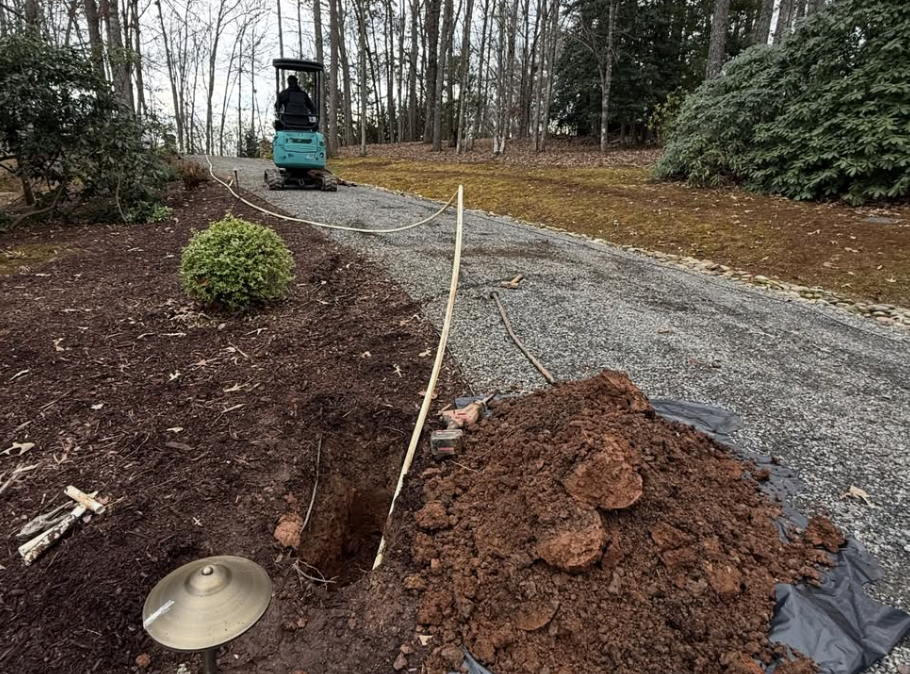
If you have a water line leak, the last thing you want is your yard, driveway, or landscaping torn up [...]
View Video

All Services