UNRESTRICTED MASTER PLUMBERS
What Are the Signs of Tree Roots in Sewer Lines in Cumming, GA?
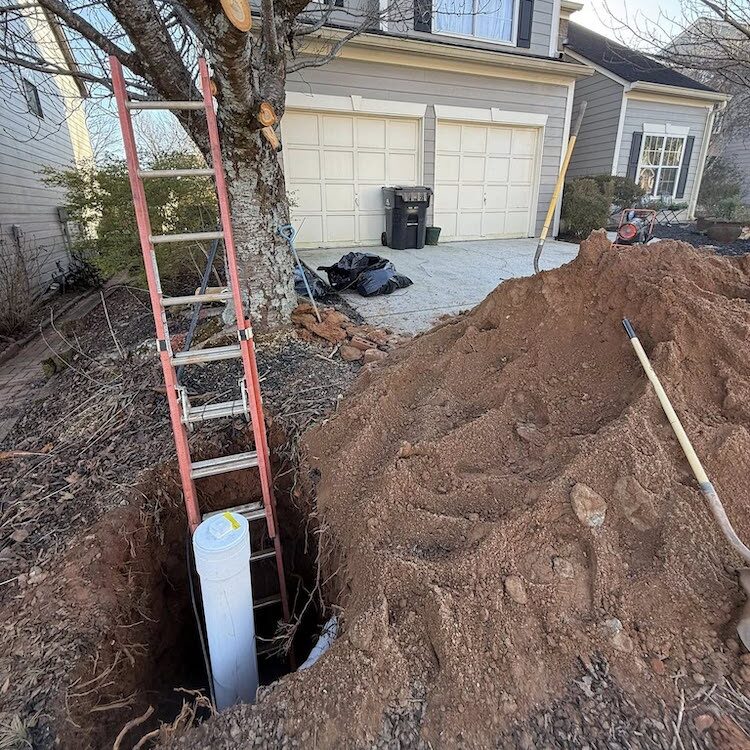
Tree roots and sewer lines are a bad combination—especially because the problem often builds slowly. At first, it might look like a “random clog.” Then it becomes a recurring backup. And eventually, it can turn into a damaged sewer line that needs repair.
If you’re in Cumming, GA and your drains keep slowing down, gurgling, or backing up, tree roots could be the reason. When you call us at Specialty Plumbing and Drain LLC, our master plumber can confirm what’s happening with a video camera inspection, explain your options clearly, and help you choose the most practical fix—whether that’s cleaning, ongoing maintenance, or trenchless plumbing repair if the pipe is damaged. We’re a 5-star Google-rated team and we provide emergency plumbing services when the situation can’t wait.
Why tree roots get into sewer lines in the first place
Roots don’t “hunt” for sewer lines on purpose—but they do hunt for moisture. Sewer lines can develop tiny openings over time, such as:
- Small cracks in the pipe
- Separated joints
- Deterioration in older materials
- Shifting soil that causes misalignment
Once roots find that moisture source, they can grow into the pipe and create a web that catches toilet paper and debris. Over time, the opening gets worse, the roots get thicker, and clogs become more frequent.
The most common signs of tree roots in sewer lines
Here are the warning signs we see most often in Cumming-area homes. One sign alone doesn’t guarantee roots—but a pattern of these symptoms is a strong clue.
1) Recurring clogs that keep coming back
This is the biggest red flag.
If you clear a clog and it returns weeks later (or even days later), that’s often because the blockage wasn’t just “stuff in the pipe.” Roots can act like a net inside the line, catching debris repeatedly.
A plunger or basic snaking might provide temporary relief, but it usually won’t solve the underlying root intrusion long-term.
2) Slow drains in multiple fixtures
A single slow sink can be a localized clog. But if you’re noticing:
- Slow toilets and slow showers
- Multiple sinks draining sluggishly
- A “whole house” slow drain feeling
- That can point to a restriction deeper in the system—often in the main sewer line where roots commonly intrude.
3) Gurgling sounds from toilets or drains
When the sewer line is partially blocked, air can get trapped and forced back through fixtures. You may hear:
- Gurgling after flushing
- Bubbling in the toilet bowl
- “Glugging” sounds when the shower drains
- Gurgling is your plumbing system telling you it’s struggling to move wastewater the way it should.
4) Toilet bubbling when you run water elsewhere
If you run a sink or shower and notice the toilet bowl bubbling, that can be a sign of a developing main line restriction. Roots are a common cause because they narrow the pipe and disrupt flow.
5) Sewage odors inside or outside the home
Root intrusion can slow drainage and cause waste to sit longer in the line. That can lead to odors, especially if the blockage is worsening. If you smell sewage:
- In a bathroom
- Near a cleanout
- Outside near the foundation
Call us. Our master plumber will take it seriously and help you avoid a full backup.
6) Backups in the lowest fixtures (especially tubs/showers)
When the main sewer line is restricted, backups often appear in the lowest points of the home. You might see:
- Water backing up into a tub when you flush
- A shower filling with water during laundry
- A lowest-level toilet overflowing or draining poorly
If you’re seeing active backups, call us immediately for emergency plumbing services. The faster we stop the backup, the more damage you can prevent.
7) Problems get worse after heavy rain (sometimes)
Not every sewer issue is rain-related, but in some cases, heavy rain can worsen symptoms if:
- The line is already compromised
- Soil shifts around the pipe
- Infiltration increases around damaged sections
If you notice a pattern—“it always acts up when it rains”—that’s a good reason to schedule a camera inspection.
8) You have large trees near the sewer line route
If you have mature trees in the front yard, near the street, or along the likely sewer line path, root intrusion becomes more likely—especially in older neighborhoods.
Even small cracks can invite roots over time.
How we confirm roots (without guessing): video camera inspection
The only way to know for sure is to look.
When you call us, our master plumber can perform a video plumbing inspection to:
- Confirm whether roots are present
- Locate exactly where they’re entering the line
- Determine whether the pipe is cracked, offset, or collapsing
- Decide whether cleaning is enough or repair is needed
This is also the best way to avoid spending money on repeated “temporary fixes.”
What happens if you ignore tree roots in a sewer line?
Roots rarely stay the same—they grow. Ignoring the issue can lead to:
- More frequent clogs and backups
- Increased risk of sewage overflow inside the home
- Pipe damage that worsens over time
- Higher repair costs later (because the pipe condition can deteriorate)
If you’ve already had more than one clog in a short period, it’s usually cheaper to diagnose and address the cause now than to keep paying for repeat drain clearing.
How we fix tree root problems in sewer lines
The right solution depends on two things:
How severe the root intrusion is
Whether the pipe is structurally sound
Here are the most common paths we recommend after inspection.
Option 1: Clear the roots and restore flow (when the pipe is still in good shape)
If the pipe is intact and the root intrusion is manageable, we can clear the line and get it flowing again. In some cases, hydro jetting may be appropriate to clean the pipe walls more thoroughly and remove buildup that’s getting caught on roots.
This can be a good solution when:
- Roots are present but not causing major structural damage
- The homeowner wants the least invasive, most immediate fix
- We can pair it with a maintenance plan to reduce recurrence
Option 2: Repair the damaged section (when roots are entering through cracks/joints)
If roots are entering through a damaged area, clearing the roots alone won’t stop them from coming back. The long-term fix is to repair the entry point.
Depending on the situation, our master plumber may recommend trenchless plumbing repair. Trenchless methods can often fix underground sewer line problems with less disruption than traditional digging, when the line qualifies.
Option 3: Replace a failing line (when the pipe is collapsing or beyond repair)
If the camera inspection shows collapse, severe offset joints, or extensive damage, replacement may be necessary. We’ll explain what we found, show you the footage when possible, and walk you through the most practical plan. Our goal is to be transparent—so you understand what’s urgent, what can wait, and what the smartest long-term move is.
Can you prevent tree roots from getting into your sewer line?
You can’t control tree growth, but you can reduce risk by:
- Avoiding flushing wipes and heavy paper products (they snag easily)
- Scheduling proactive inspections if you’ve had repeat clogs
- Addressing small issues early before they become backups
- Having us evaluate the line if you’re buying a home with mature trees
If you’ve had one root-related clog already, a follow-up camera inspection later can help confirm whether the line is stable or getting worse.
Why homeowners in Cumming call us for sewer line problems
Root intrusion can be frustrating because it’s not always obvious—and it’s easy to waste money on repeated quick fixes.
When you call us at Specialty Plumbing and Drain LLC, you’re getting a 5-star Google rated team led by an Unrestricted Master Plumber. We’re known for being professional, informative, transparent, and timely. We also have the tools to handle the full situation:
- Emergency plumbing services for active backups
- Video plumbing inspections to confirm the cause
- Trenchless plumbing repair options when the pipe is damaged
And if the issue turns out to involve the supply side, we can also help with trenchless water line repair in qualifying cases
Think you have tree roots in your sewer line in Cumming, GA? Call us.
If you’re seeing recurring clogs, gurgling drains, sewage odors, or backups, don’t wait for it to become a full sewage overflow. Contact us at Specialty Plumbing and Drain LLC. Our master plumber will help you get answers fast with a camera inspection, explain your options clearly, and get your sewer line flowing the way it should—without guesswork.
Contact Us
Commercial Plumbing Services
– Clogged Toilet Cleaning
– Commercial Plumbing
– Drain Cleaning
– Emergency Plumbing Repairs
– Expansion Tanks
– Gas Line Installation
– House Spigots
– Hydro Jetting
– Industrial Plumbing
– Main Water Line Repairs
– Plumbing Video Camera Inspection
– Pressure Reducing Valves
– Residential Plumbing
– Sewage Ejector Pump
– Sewer & Drain Services
– Sewer Line Cleaning
– Slab Leak Repair
– Sump Pump Repairs & Installs
– Trenchless Plumbing Repair
– Trenchless Water Line Repair
– Tunneling for Plumbing
– Water & Sewer Line Repairs
– Water Heater Replacement & Installs
– Water Leak Detection
5 Star Reviews
Came out quickly on a Sunday 30 min after I called upon recommendation from a [...]

Sean did a great job fixing our supply line. He and his team were very professional and had my leaking pipe fixed on the same day I called. As a business owner myself, it’s nice to see customer service provided the right way.
Thanks Sean!
– Aaron T.
Sean was amazing! I had an emergency situation and they rushed out on a Saturday. Sean quickly found the issue. He provided excellent advice as a master plumber. He directed me to my HoA since they may be responsible. He ended up being correct. He was extremely helpful in an incredibly stressful situation.
– Chad D.
I had them come out for a second opinion, and, I’m glad I did, as the first company I got out were trying to rip me off and sell me an unnecessary hydro jetting service at a ridiculous price. Sean was very transparent about everything and seemed like he genuinely cared. I’ll definitely be calling them again in the future for any plumbing issues I have!
– Zac
I had them come out for a second opinion, and, I’m glad I did, as the first company I got out were trying to rip me off and sell me an unnecessary hydro jetting service at a ridiculous price. Sean was very transparent about everything and seemed like he genuinely cared. I’ll definitely be calling them again in the future for any plumbing issues I have!
– Zac
Wow, great customer service still exits, like the good old days. From the first phone call, Jamie took the time to explain some drain line basics; which services help, which services actually can make the problem worse, and we had two problems to cover. She set us on the right path, then Sean came out to inspect both problems: faulty gutter drains, and a leaky water heater. He went above and beyond in assessing and explaining solutions. He was very informative, patient, and above all, very kind. My wife was sold! He adroitly took us through a tricky water heater and gas line repair…and now it looks and works great. Thanks!! We highly recommend them across all their services, they can actually handle a lot.
– Gus S.
Great Company. I had Sean replace In 2 different houses the old cast iron pipes in the garage. He is a stellar guy, very professional and does an excellent job at a reasonable price. Highly recommended! Very happy, thank you, Sean.
– Patty F.
Sean did a great job replacing my main water line to the house. When he had to remove a large shrub to repair the water line underneath it, he even replanted it on the other side of the driveway. Excellent service and would highly recommend.
– Doug R.
Sean did a great job fixing our supply line. He and his team were very professional and had my leaking pipe fixed on the same day I called. As a business owner myself, it’s nice to see customer service provided the right way. Thanks Sean!
– Aaron T.
He did a great job. Were very happy with water heater replacement. It was very affordable and professionally well done. Couldnt recommend sean more. Sean got our house within code again, thank god!
– Barrett L.
Absolute 10/10 service! The owner Sean himself came out. He was extremely knowledgeable, did a fantastic job explaining to me what was being done and was extremely professional and respectful. They used premium materials with a 25 year lifespan. Other companies will use cheaper materials and then you have to call them back out next year. Specialty Plumbing does it right the first time! Fixed my issue within 2 hours and left virtually no visible marks in the lawn. 10/10 would do business with in the future.
– Zachary H.
Absolute 10/10 service! The owner Sean himself came out. He was extremely knowledgeable, did a fantastic job explaining to me what was being done and was extremely professional and respectful. They used premium materials with a 25 year lifespan. Other companies will use cheaper materials and then you have to call them back out next year. Specialty Plumbing does it right the first time! Fixed my issue within 2 hours and left virtually no visible marks in the lawn. 10/10 would do business with in the future.
– Jan C.
Talking about CUSTOMER SATISFACTION. Sean is your guy. Here’s my experience. During my vacation trip in PR this holiday season, got informed by my neighbor of a burst pipe at home caused by the freeze (perhaps 4 days of running water we estimated). I didn’t know who to call, but my neighbor recommended me Sean as the go to company because of previous experiences. Glad he did. In my case, the water line runs across a bridge (weakest point) and precisely the location of the burst. After inspection they found additional bursts, but lucky for me none inside the house. Overall job they had to replace an old galvanized steel pipe with a more suitable cross-linked polyethylene (PEX) material, and trenching from the water meter up to the bridge. Not an easy job, but they had all the machinery to make it happen. They fixed the situation the same day. When I came back home from vacation I was very pleased with the results. You cannot even tell there was worked done in my place. Most importantly, the outer pipe across the bridge was completely insulated and inside a SCH 40 steel pipe sleeve. Definitely, a much better installation of what I had before with no chances of a frozen pipe to ever happen again. And this is just the install. Then he helped me manage the insurance claim by providing the necessary documentation to support it (no questions asked by the insurance adjuster). What impresses me about Sean is taking pride of his work. Very knowledgeable, friendly and quality driven, with ultimate focus in customer satisfaction. I fully recommend him. Simply the BEST!!!
– Rafael D.
Reliable, quick to respond, reasonably priced, good quality work. Small business that treats their customers right. I would 100% recommend.
– Drew L.
Our toilet backed up on a Saturday night. We called on Sunday morning and Sean was there by ten. We had a blockage in the main line as well as a large root ball in the line in the flower bed. He has all of the latest equipment, and is certified in underground plumbing. He explained our options and got to work. He found the first blockage, dug down 5 feet, replaced pipe, then wanted to make sure the line was clear to the street, which was when he discovered the second blockage. Another dig and pipe replacement. He worked until after nine that day. He refilled holes, cleaned up, spread straw and made sure things were neat. His price was amazing for the time and amount of work that he did. We cannot say enough good things about him. He is personable, fair and thorough. Should this happen to you, give him a call first. He also gave us the name of someone to mitigate the inside mess with the insurance company. So nice to find a company that takes pride in their work and does the right thing.
– David D.
They came out the day I called and did the work that night. And they beat the price of the other plumbers who were going to take a week to get to it. My water bills have gone back down. Very happy with this company!!
– Ro M.
We discovered a leak in our kitchen that had gone into our basement. We found Specialty Drain/Sean through recommendations in our community’s FB page. He came out & brought someone who does water remediation work since we had a leak. He was very prompt, very professional & thorough. They quickly determined the problem & were super thorough with explaining options for fixing the problem. I would highly recommend Sean.
– Lisa M.
Sean and Jami are awesome. Sean came out and did a quote to assist me with getting the best outcome from my insurance company (ended up being an insurance claim). He repaired a pipe connected to a flange, and then came back to install a new toilet, after my flooring was done. Sean is very knowledgeable and has a commitment to precision, and kept me informed along the way. He is a Master Plumber. Would highly recommend using Specialty Plumbing if you want the job done right.
– Brent D.
Excellent service! Sean and his crew are extremely knowable and competent! They worked into the night to complete the job.
– David G.
Our Blog
If a plumber has ever told you your drains need to be "hydro jetted," you [...]
View Video

All Services